
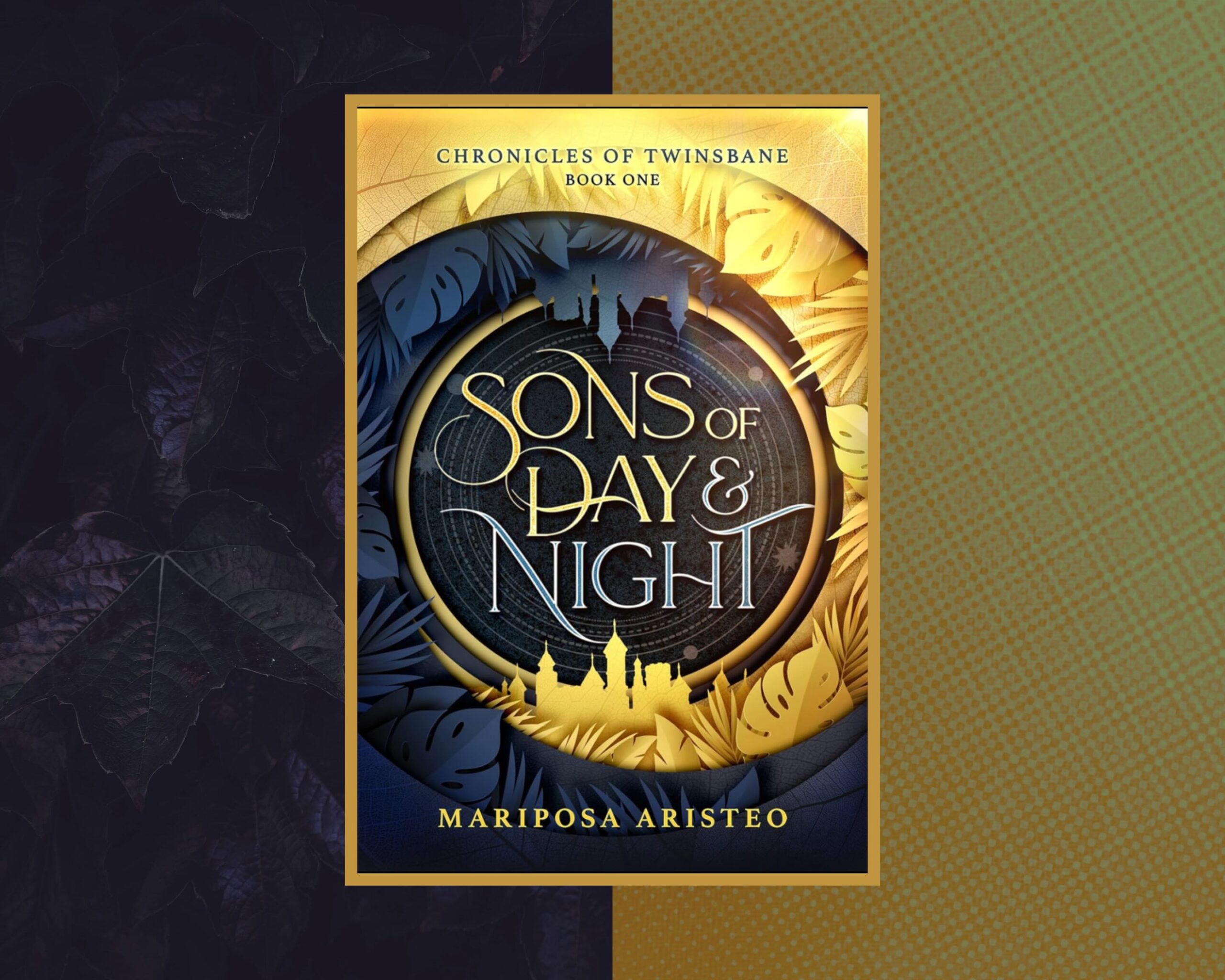
In the kingdom of Twinsbane, every person has a double. And when the double breathes their last, the doppelganger also dies.
When a disease threatens the people of Twinsbane, every person’s life is at risk. Waruu, the double to the King, is an orphaned street-rat, plagued with rumors of the Separator, a supposed medicine King Daccias is hiding that may be able to break the bonds between doubles and save hundreds of lives.
But King Daccias refuses to release the Separator to the people. So Waruu is faced with a dangerous choice: switch places with the King. If he can successfully kidnap the King, and if Waruu can stay hidden long enough to discover the Separator’s location, then he’ll be able to save his people.
But King Daccias alone knows the reason why he’s refusing to release the Separator. And what Waruu discovers may prove more lethal than the disease sweeping the kingdom.
Three of My Favorite Stories Bound Together In This Fantasy Epic
The Wingfeather Saga meets The False Prince and The Prince and the Pauper in a fantasy kingdom that resembles Australia. Just hearing those three stories paired together instantly nudged me to get my hands on a copy of this novel.
Sons of Day and Night paired snarky characters, an engaging setting, and a plot that twisted truth and history into a hilarious and riveting story of doppelgangers, look-alikes, and bonds that go far beyond first glances.

I’ve been on author Mariposa Aristeo’s email list for a long time, excitedly watching for updates related to this story. Not only was I thrilled to follow along with Waruu and Daccias as I read Sons of Day and Night, but the nods to so many of my favorite stories were thrills to discover!
Be sure to check out the end of this article where I include a full listing of all the Noteworthy Elements I marked in the story, as well as any final thoughts I had on the book.
Sometimes Your Greatest Enemy Is Yourself (And the Lies You Believe)
When I first began reading this story, the character of Daccias, an impudent, stubborn king, absolutely grated against my nerves. I first assumed that it was the author simply showing us how much of a brat he was to his servants and everything around him. It wasn’t until later in the story that I began to wonder whether there was more to his backstory. For the sake of not revealing spoilers, I will only say that readers will certainly not be disappointed!
One thing that struck me in this story was when the memories of Waruu and Daccias began to combine, showing that their bond as doubles was strengthening. It reminded me of The Warden and the Wolf King by Andrew Peterson when the answers to ancient conflicts are revealed through perfectly spaced flashbacks – great suspense!
Sons of Day and Night is the first book in the Chronicles of Twinsbane. Currently, it is the only full-length book Aristeo has written. With no release date yet announced for future books in the series, readers are left on the edge of their seats with the climactic (and cliffhanger) ending of the first story. I can’t wait to see where this story goes and how the author will resolve the tension and suspense that permeated the first book!
Looking for an Action-Driven Fantasy Story Perfect for Boy Readers?
The twists and turns in the story plot went routes that I totally did not expect. Between discovering haunting truths about Twinsbane’s history to searching for answers on why Daccias refused to reveal the Separator, I was thoroughly gripped by the entire tale.
Another thing that I really enjoyed about the book was how it turned away from a romance subplot so common in fantasy stories. The platonic friendships in the book were heart-wrenching and satisfying, but without an unnecessary romance tale that would have only added confusion to this incredible story. And the characters of Daccias and Waruu? Humor, wit, and a perfect dash of heroism!
For readers who may have difficulty tracking storylines, Sons of Day and Night may not be an ideal beginning to the fantasy genre, but for readers who already love the complex themes prevalent in both The Wingfeather Saga and The False Prince, then Sons of Day and Night should be the next title on your bookshelf!

For readers who love betrayal, mystery, and quick-witted main characters, find a copy of Sons of Day & Night and let the tale sweep you away to Twinsbane! (Did I forget to mention that the fantasy kingdom of Twinsbane resembles Australia? Just one more reason to dive into this tale!)
Noteworthy Elements in Sons of Day & Night: There are no sexually contentious scenes or explicit profanity in the story. Because of this, I would recommend the book to some readers as young as ages 12-14. However, the violence in the story may be potentially disturbing to younger readers and may best be suited towards readers ages 15+. Please carefully consider the Noteworthy Elements below and decide for your own young readers whether this story is appropriate for them:
- Violence: Daccias dreams that the people hang him. He witnesses, at a young age, his parents’ deaths. He tells a soldier that he saw “my parents’ innards spilling out after being impaled by craggy cliffs” in order to convince the soldier to let him into the morgue. Daccias describes a dead body as “Two ashen faces stare at me. No, it’s one that’s split in half. I lift the blanket off his leg. Dried, blackened blood stains his skin. My own blood chills. His body hisses, his white skin cracking and breaking apart”. When looking into a coffin, Waruu describes it as “a broken face stares up at me with eyes that are splintered into sections”. When a disease strikes the kingdom, Daccias imagines “bodies piling up in the streets, crawling with maggots and reeking of death”.
- Profanity: Waruu is called a “little demon” by a guard once and when making faces at a guard says that “my face transforms from demon to angel”. The expressions “son of a hot day” and “son of a dark night” are each used a handful of times by opposing members in the kingdom. The words “heck”, “dang”, and “golly” are each used once. The phrases “for the love of stars” and “holy suns” are each used once. The word “hell” is used literally a few times. When listing off the names that angry citizens have called him, Daccias mentions “at least they didn’t use the D-word”. While this could be referring to the common profanity, Daccias (in the context of the story) could be referring to his own name, or he is referencing the expression “son of a hot day”.
- Spiritual: There is a reference to the afterlife. Daccias makes a reference to “the dark side of the moon I was born under”. Waruu exclaims that he would “rather make a pact with the devil himself” and describes the flickering torches as “demons with pitchforks, each one groping for their next victim”.
- Other: Daccias wonders if one of his nobleman has “been in the loo ripping his hair out strand by strand over my unreasonableness”. Daccias references how he carries “a sword with me every time I need to relieve myself or fetch a drink of water”. Daccias makes a reference to being delayed by a “bad case of indigestion”.


