
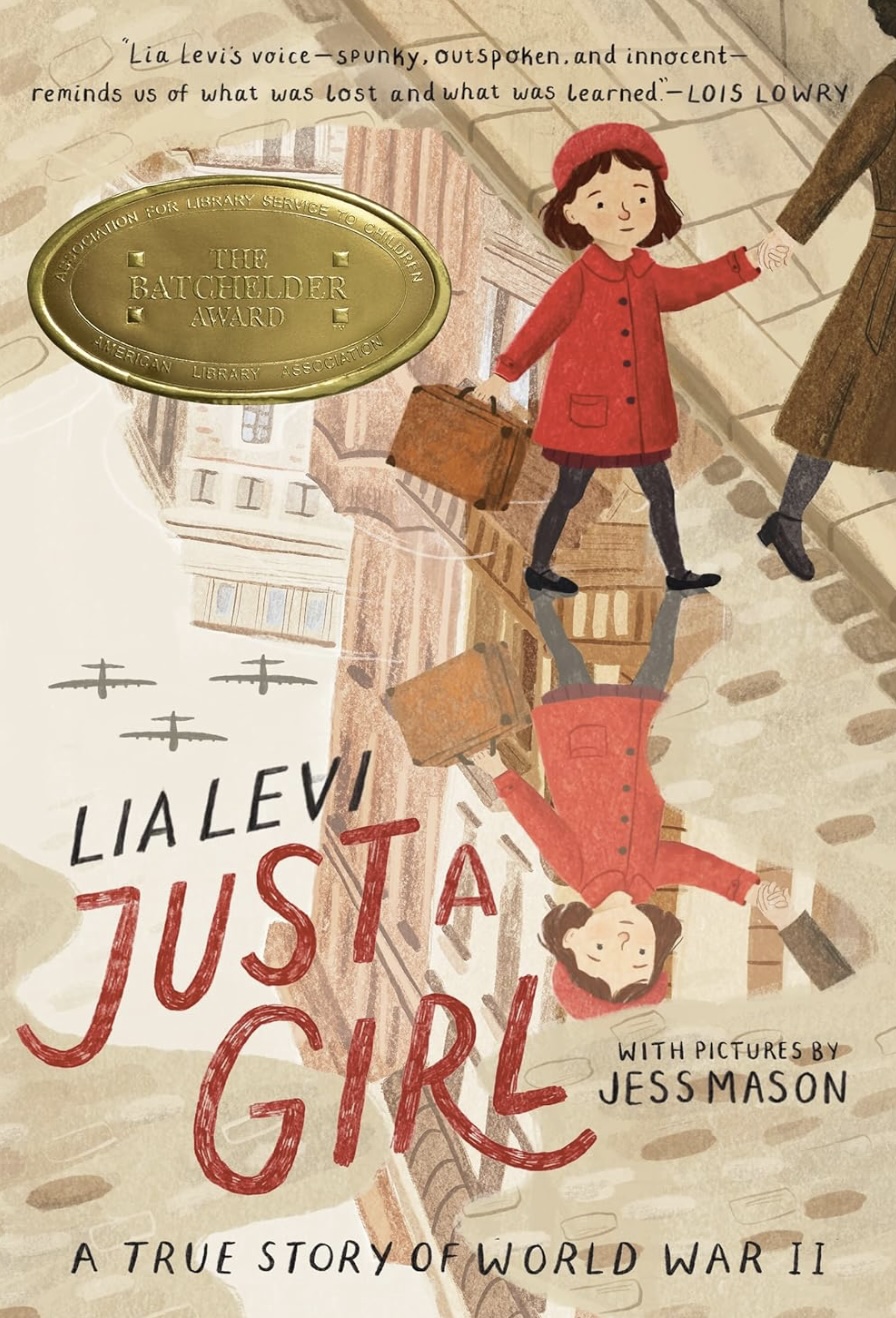
Author: Lia Levi
Recommended Age: 8-11
Genre: Memoir, Historical Fiction
Date Published: 2022
Summary: It’s 1938 in Italy and six-year-old Lia thinks Italy’s leader, Mussolini, is silly for prohibiting Jewish children from attending Italian schools, Jewish papas from working, and Jewish families from taking vacations to the seashore. And when Papa loses his job, Lia’s family must give up their home and move from city to city. But war is drawing closer and soon Lia and her sisters must hide at a Catholic boarding school to protect their identities and their lives.
Notes from The Radical Reader:
- Noble Characters: I first discovered this book sitting on our library’s shelves in the WWII section. Flipping open the front cover, the first words instantly arrested my attention: “My name is Lia (if you look at the cover of this book, you’ll find my name on it!) and I want to tell you the story of when I was a little girl”. Just a Girl chronicles the true story of six-year-old Lia’s escape from Turin, Italy during WWII as well as the struggles her Jewish family faced from the oppression of Mussolini and the Nazis. Riveting, engaging, and true, the character of Lia lights up the pages of this short book to bring WWII in Italy to life for young readers.
- Captivating Plots: From being forced out of schools and workplaces, to having vacations at the beach suddenly be illegal, Lia’s Jewish family must leave their home and hide from Mussolini and the Nazis.
- Elaborate Worlds: Written in a poignant, engaging style, Just a Girl showcases through the eyes of a six-year-old child the persecution Jewish families suffered under Mussolini and Hitler’s regimes. Engaging, riveting, and heartfelt, Just a Girl will appeal to any reader who loves a child protagonist, WWII era story, and the mission of one family to be reunited in the face of oppression.
Notes from The Radical Reader:
- Sexual Tension: Lia and a young boy are trapped in a classroom by cruel classmates and teased that they are engaged. Though not explicit, there is one brief reference to Lia’s nurse living with her fiancé.
- Spiritual: There is a reference to the children being made to recite the rosary at their boarding school.
- Other: Lia’s Nonna calls imaginary stories (like poetry and fairy-tales) a “good lie, which you only tell for fun”.


